Robotic CNC Machine Tending
We build automated robotic tending solutions designed to maximize spindle uptime. Available in side-mount and front-mount configurations, our cells are built to seamlessly communicate with your mills and lathes.
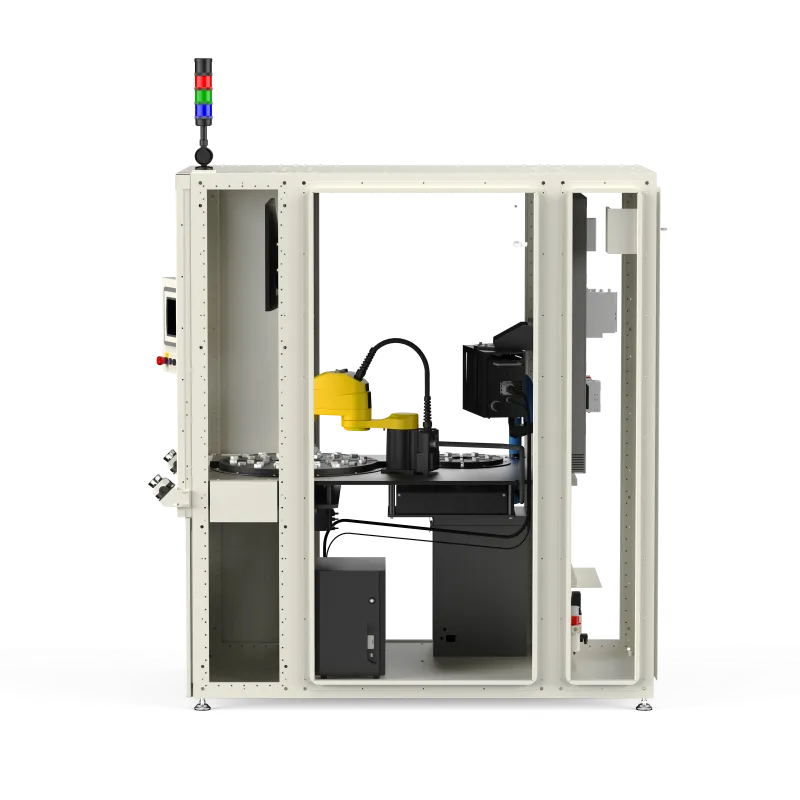
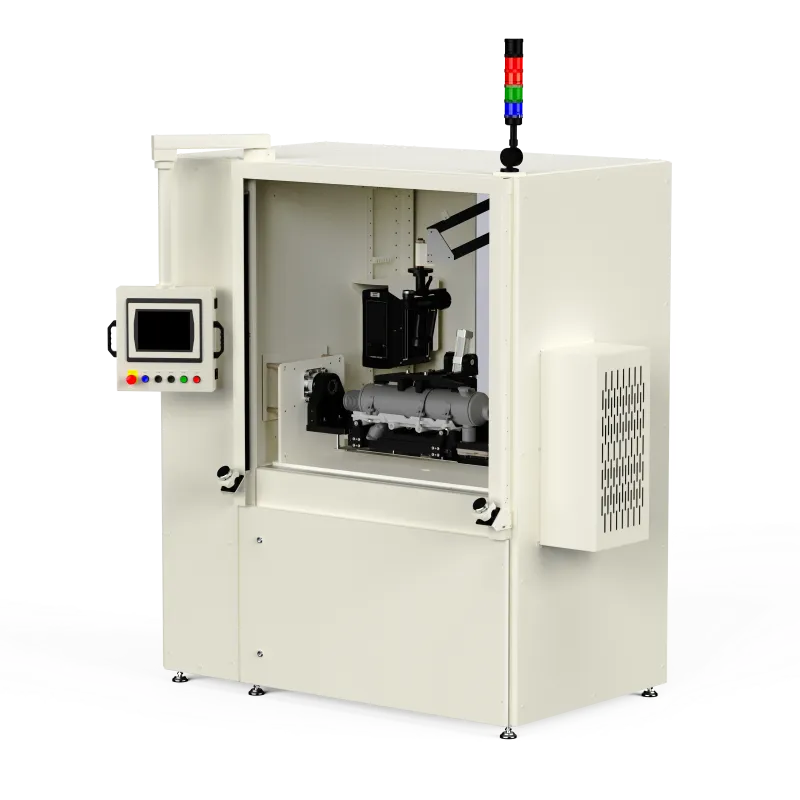
Standard Platform. Faster Delivery. Better Payment Terms.
When a CNC tending application fits our modular cell configurations, we eliminate redundant engineering, shorten the build schedule, and offer more flexible payment terms. Because the core machine design is already established, the project moves into production faster than a fully custom build.
Every system is built and tested as a complete cell on our floor. The robot, dual-gripper tooling, CNC communication interfaces, guarding, and controls are fully integrated before shipping. When the machine arrives at your facility, the goal is simple: connect power and air, verify the robotic path, and move right into production without complex on-site engineering.
Standard Cell Foundation
To ensure rigidity and reduce lead time, we build from a standard heavy-duty cell base. The structural frame, guarding, electrical cabinet, controls, and safety system are strictly defined, giving your machine tending project a reliable starting point.
Learn how our Modular Platform works →Built Around Your Machine Workflow
While the base is standard, the way parts are presented to your machine center dictates your spindle uptime. Whether your application requires drawer and bin staging, vision-guided picking, or continuous multi-machine loading, we configure the cell around your exact workflow.
See our Custom Application capabilities →Part Handling and Machine Integration
A CNC tending cell has to match the machine, part, chuck or fixture, loading method, and available control interface. Depending on the application, the system may include:
Part Handling
Single or dual grippers, part-flip stations, drawers, trays, conveyors, or other raw-part staging methods matched to the part and production cycle.
Machine Interface
CNC interface for door control, chuck or vise status, cycle start, machine-ready signals, alarms, and part-complete confirmation.
Part Cleaning and Secondary Operations
Air blow-off, coolant removal, part flipping, orientation checks, barcode scanning, inspection, marking, or other operations before unloading.
Application Tooling
Grippers, nests, locating features, and fixtures designed around the part geometry, machining process, and loading requirements.
CNC Tending Cell Layouts
The cell layout has to fit the CNC, available floor space, operator access, material flow, and maintenance requirements.
| Configuration | Typical Application | Key Advantage |
|---|---|---|
| Side-Mount Loader | Frequent changeovers or shared operator access | Positions the robot and guarding beside the CNC, helping preserve access to the front of the CNC for setup, maintenance, tool changes, and occasional manual operation. |
| Front-Mount Loader | Dedicated production or limited side access | Positions the cell in front of the machine door. This can provide a direct loading path and space for drawers, trays, or other part-staging equipment. |
| Dual-Machine Tending | Two nearby CNC machines | Uses one robot and shared part staging to tend two nearby machines. One robot can service both machines when cycle times allow. |
Review our current offers:
CNC Tending Cells
Automated robotic tending solutions designed to maximize spindle uptime. Available in side-mount and front-mount configurations.