Robotic Deburring & Finishing
We build standalone deburring cells for edge blending, deflashing, and surface processing. Every cell includes a 6-axis robot for flexible tooling angles and a built-in heavy-duty dust collector to keep your facility safe and clean.
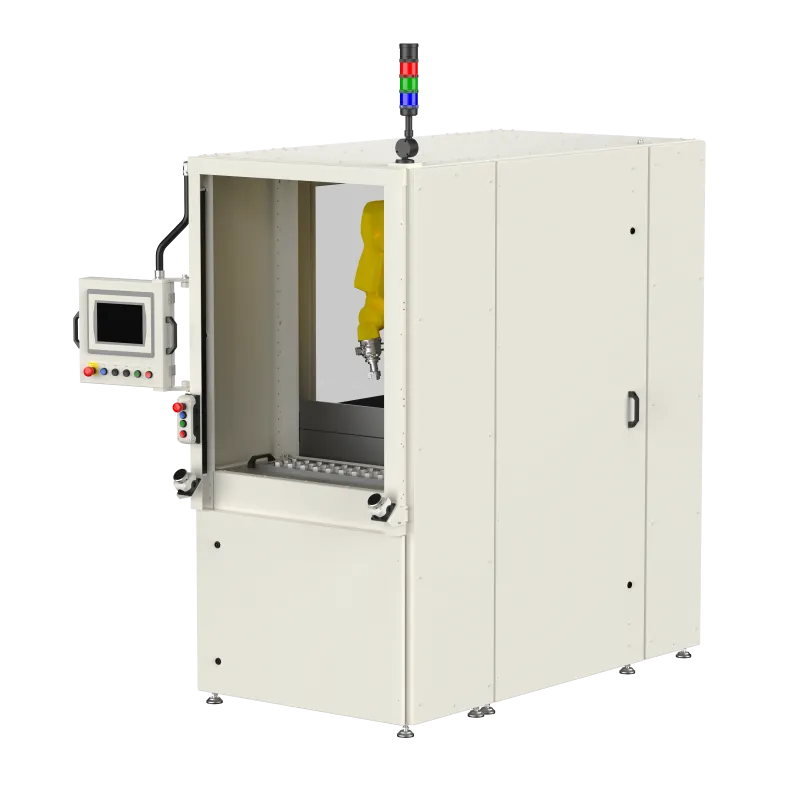
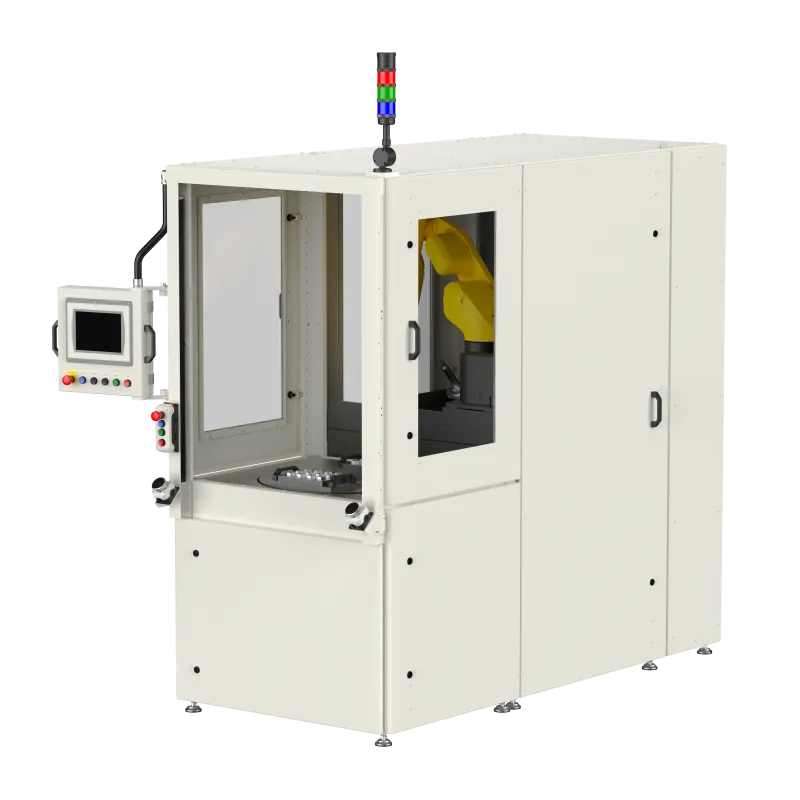
Standard Platform. Faster Delivery. Better Payment Terms.
When a surface finishing application fits our modular cell configurations, we eliminate redundant engineering, shorten the build schedule, and offer more flexible payment terms. Because the core machine design is already established, the project moves into production faster than a fully custom build.
Every system is built and tested as a complete cell on our floor. The 6-axis robot, high-torque spindle, active compliance devices, dust collector, guarding, and controls are fully integrated before shipping. When the machine arrives at your facility, the goal is simple: connect power and air, verify the robotic path, and move right into production without complex on-site engineering.
Standard Cell Foundation
To ensure rigidity and reduce lead time, we build from a standard heavy-duty cell base. The structural frame, guarding, dust collection housing, electrical cabinet, controls, and safety system are strictly defined, giving your deburring project a highly vibration-resistant starting point.
Learn how our Modular Platform works →Built Around Your Part Handling
While the base is standard, proper part presentation is critical for quality finishing. In deburring, the part must be held firmly against the force of the spindle. If your application requires multi-step processing, complex part nests, or rotary indexing, we configure the cell around your exact workflow.
See our Custom Application capabilities →Deburring Integration & Process Control
Successful automated finishing requires more than just moving a robot along a path. We engineer the cell to safely manage force, contain particulate, and account for abrasive wear over time.
Active Compliance
Spindles equipped with pneumatic compliance maintain constant radial or axial force against the part, automatically adjusting for slight variations in castings or edge profiles.
Integrated Dust Collection
Heavy-duty downdraft tables and enclosed extraction systems capture hazardous metal or composite particulate safely at the source, keeping your facility clean.
Rigid Part Fixturing
Surface finishing applies significant force. Parts are secured in custom-machined rigid nests, with rotary or drawer systems allowing safe operator loading outside the cell.
Tool Wear & Auto-Change
Automated tool changers allow multi-step finishing (heavy grind to fine polish), while integrated sensors adjust robotic paths as abrasive media wears down.
Material & Media Types
Automated finishing is heavily dependent on selecting the correct media. Our team evaluates your part to match the right spindle, compliance device, and abrasive tooling to the job.
| Type of Processing | Typical Tooling | Application Focus |
|---|---|---|
| Aggressive Material Removal | Carbide Burrs / Hard Grinding Wheels | Used for heavy deflashing, gate removal on castings, or heavy edge chamfering on hard metals where significant material must be displaced quickly. |
| Edge Breaking & Blending | Flap Wheels / Abrasive Brushes | Ideal for breaking sharp machined edges, blending minor surface imperfections, and preparing parts for subsequent coating or painting. |
| Surface Polishing | Polishing Buffs / Scotch-Brite™ | Employed when cosmetic appearance is paramount. Uses fine abrasives or polishing compounds to achieve a smooth, reflective, or uniform matte finish. |
| Internal / Cross-Hole Deburring | Wire Brushes / Flex Hones | Designed to reach inside bores or cross-holes to remove internal burrs left behind by drilling or tapping operations without altering hole tolerances. |
Review our current offers:
Deburring Cells
Automated robotic deburring and surface finishing cells designed to ensure consistent part quality and reduce manual labor.